Rising temperatures from climate change will slow economic productivity, and if left unchecked will lower the average global wage by 25 per cent by 2100, according to a new study. Economic productivity peaks at 13 ºC, and declines at lower or higher temperatures, according to a review of global economic data from the World Bank. […]
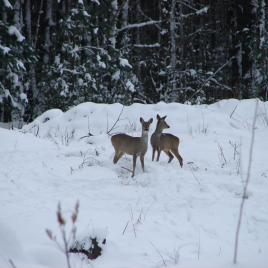
The Nature of Chernobyl
At the site of the Chernobyl disaster, animals are thriving, according to findings from a long-term census. Researchers found populations of native wildlife, such as elk, deer, boars, and wolves, have bounced back, reaching a population size similar to nearby nature reserves. The researchers note that this growth in population occurred at a time when […]
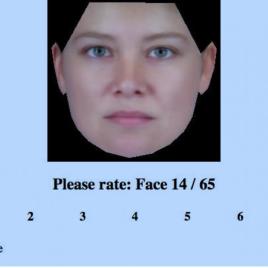
Beauty really is in the eye of the beholder
Beauty really is in the eye of the beholder, or at least partly, according to new findings. While there are indeed some universal aspects of attractiveness, such as symmetry, they believe that the uniqueness of an individual’s facial preferences is determined by experiences with friends and peers, past partners, as well as social and popular […]
Using the benefits of climate change to convince non-believers
Motivating people to take action on climate change, regardless of their existing beliefs, can be done by communicating the social benefits of acting in a climate-friendly way, according to researchers. Communicating development benefits (such as economic and scientific advancement) and the benevolence benefits (such as a more moral and caring community) helped to motivate people […]
You catch more flies with a frog’s tongue
Frogs capture their prey with the flick of a sticky tongue, and now new research is showing just how the tongue can be as sticky as adhesive tape. Now, by filming frog tongues at high-speed, researchers have captured, for the first time, how the tongue manages to immediately adhere to different surfaces. The video showed […]
Civilian deaths from weapons in the syrian conflict
Syrian children and women are disproportionately affected by explosive weapons in populated areas, and their use “should be urgently prohibited” according to the authors of a new study. These weapons include shelling, air bombardment, and car bombs. The research team examined over 78,000 civilian violent deaths that occurred in Syria from March 2011, to January […]
Rethinking Canadian TB screening
Canada’s current practice of screening all newly arriving immigrants for tuberculosis (TB) is inefficient according to new research. The authors believe screening should focus only on immigrants arriving from countries with high TB rates. Researchers found that immigrants arriving in Ontario between 2002 and 2011 came from 214 countries, however all cases of active TB […]
The role of science in Canadian policy
The Science Integrity Project, which aims to make evidence-based decision-making a high priority for government at all levels, has released four principles for improving policy decisions using the best available evidence. The principles were developed through the collective wisdom of 75 leaders — in science, indigenous knowledge, public policy, civil society, and governance. The project […]
The Angelina Jolie effect
Media coverage of Angelina Jolie’s double mastectomy lead to an increased awareness of options for reconstructive breast surgery. Researchers compared responses to two surveys asking women questions on breast cancer and surgery, one conducted pre-Jolie’s announcement in March 2013, the other post-announcement in June 2013. Original research paper published in CANCER on September 28, 2015. Names and affiliations […]
Top predators protecting trapped ocean carbon
Over-harvesting top level predators from the oceans and coastal habitats could have far-reaching consequences on the carbon cycle and diminish our ability to offset climate change. Coastal vegetation, such as seagrasses and mangroves, are more efficient at capturing and storing carbon than tropical rainforests, and account for more than half of the ocean’s carbon storage […]
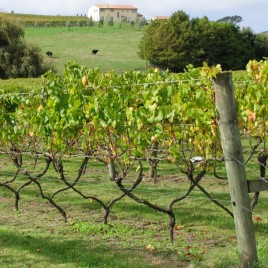
How a wine gets it’s unique flavour
The terroir of a wine, or the flavour that arises from the environment in which it’s produced, is affected by the types of microbe in the vineyard and the yeasts used during the fermentation process according to a new study. Using six genetically different populations of a microbe, S. cerevisiae, from six wine growing regions, […]
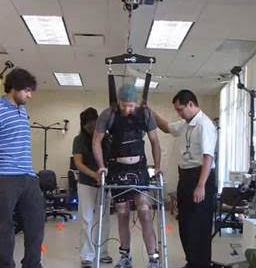
Teaching a paraplegic to walk
For the first time a person with complete paralysis in both legs (paraplegia), arising from a spinal cord injury, was able to walk without relying on manually controlled robotic limbs. The results show that brain-controlled walking can be restored after a complete spinal cord injury. After undergoing mental training, and physical rehabilitation to restore the […]
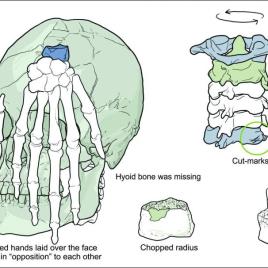
9,000 year-old ritual decapitation found
A 9,000 year-old ritualized decapitation may be the oldest case found in the New World, according to researchers, leading to a re-evaluation of the origins and geographic dispersion of the practice. The remains, a skull, two amputated hands, and several vertebrae, were found laid out in a way suggesting that they were likely part of […]
Let’s be clear about cannabis
Researchers must be more careful with the language they use when describing the relationship between cannabis use and schizophrenia to avoid causing misinformation and panic in the public, according to a Canadian researcher. In a Perspective the researcher writes the epidemiological evidence does not support the conclusion that cannabis use causes schizophrenia. Instead the author writes […]
Increasing risk of coastal erosion from El Niño
Coastal areas around the pacific will be at increased risk of erosion and flooding if a projected increase in extreme El Niño and La Niña events occurs, according to a new study. Researchers found that observed coastal erosion across the Pacific varies closely with El Niño events, independent of changes in sea-level rise. The researchers […]
Failing our fish: Most at-risk fish species less likely to be listed
The more at risk a marine fish is in Canada, the less likely it is to be listed on the Species At Risk Act according to new research. According to Susanna Fuller, co-author and Marine Program Coordinator at the Ecology Action Centre in Halifax, “less than 20% of at-risk marine fishes in Canada have been […]