
Swinging our arms while running not only helps balance forces that would otherwise cause us to wobble, it also saves energy, according to a new study. By measuring rates of oxygen consumption and carbon dioxide production, researchers have shown that swinging your arms while running decreases the net metabolic power demand. Running with hands held […]
Category: Paper of Interest
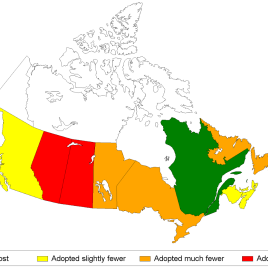
What’s the greenest province in Canada?
Researchers measuring pro-environmental behaviour in Canada at the household level found that British Columbia and Québec lead the pack. The study was conducted using the answers to 39 questions on the 2007 Environment Survey of Statistics Canada. They found out that households in British Columbia, Quebec, Prince-Edward-Island and Nova-Scotia were the greenest opposed to Alberta, […]
Lower risk of cerebral palsy among immigrant children
A new study shows that babies born in Ontario from immigrant mothers have a 23% lower risk of cerebral palsy (CP), a common motor disability that appears at age 4 and for which there is no cure. The study followed all single births in Ontario from 2002 to 2008. The rate of CP among non-immigrant […]
Gene variant reduces risk of Alzheimer’s disease
A new study shows that a particular gene variation is associated with a lower risk of developing Alzheimer’s and a delay in the onset of symptoms. The study analyzed the brains of 800 Quebecers and found that a variant of a gene carried by about a quarter of the population is associated with a 50% […]
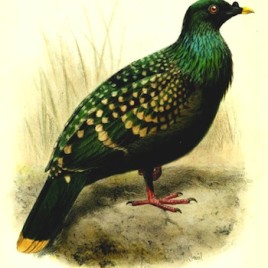
Spotted green pigeon was a unique species
DNA analysis has shed light on the origins of the mysterious spotted green pigeon, of which only one stuffed specimen remains. The specimen is held by the World Museum in Liverpool UK, but there is no record of where the pigeon was found, nor are there any records of sightings in the wild. DNA barcoding […]
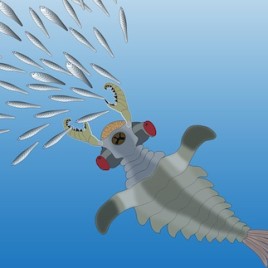
Ancient creatures display modern features
New, well-preserved fossils from China suggest that an ancient sea predator may share nervous system features with its modern descendants. Anomalocaridids are creatures from the Cambrian era – over 500 million years ago – first described from fossils found in the Burgess Shale, in British Columbia’s Yoho National Park. The new fossils from China describe […]
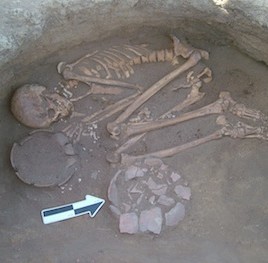
Dental plaque reveals ancient human diets
Dental plaque from ancient human burial sites in Sudan has provided clues as to what humans ate nearly 10,000 years ago. Chemical analysis of the plaque found specific substances – called terpenoids – that are unique to a plant called purple nut sedge. While considered a weed today, the analysis indicates it was an important […]
Cardiac rehabilitation is underused worldwide
Helping patients manage heart disease through diet and exercise is a proven and cost-effective strategy, yet its use worldwide is limited, a new review shows. Cardiac rehabilitation programs provide education, exercise and risk reduction and have been shown to reduce mortality by up to 25 per cent. Yet worldwide, only 39 per cent of countries […]
Ontario physicians more likely to register for organ donations than general public
A new study led on 15,000 physicians in Ontario shows that 43.3 percent of them registered for organ and tissue donation, an higher rate than the general population (23.9 percent). This is the first study to document rates of actual organ donor registration among physicians in Canada, and authors conclude that this finding should help […]
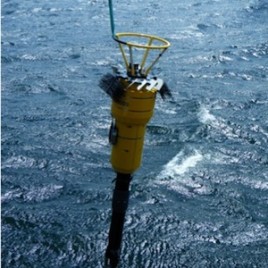
Wind in Southern Ocean influences mixing of the deep ocean
A new study shows that winds in the Southern Ocean near Antarctica influence the rate at which deep ocean waters – which act as a key reservoir for heat, carbon and nutrients – mix with the shallower waters above them. Using data from 20 years worth of satellite and probe-based measurements, researchers mapped out how […]
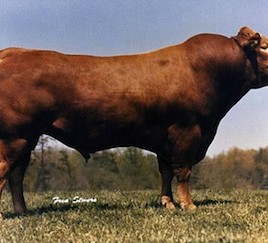
The 1000 Bulls Project: New bovine genomes published
The first phase of the “1000 Bulls Project” reports complete DNA sequences for 234 animals that are considered key ancestors of the worldwide Holstein-Fresian, Jersey and Fleckvieh breeds. By cross-referencing the tiny differences in these genomes with information on the animals performance – milk production (in dairy animals), weight gain (in beef cattle), genetic defects, […]
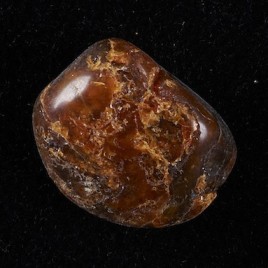
Unlocking the secrets of amber’s toughness
A new analysis technique helps explain how amber achieves its strength and durability, and could help humans mimic it in their own materials. Scientists have been able to isolate the building blocks – including communol, ozol and succinic acid – but exactly how they fit together has been a mystery. Made from fossilized tree sap, amber […]

High-energy radio-burst comes from outside of our galaxy
A team of scientists observed a ‘fast radio burst’ using the Puerto Rican Aceribo radio telescope coming from outside our galaxy, a new study shows. This confirms previous observations from the Parkes radio telescope in Australia and discard the hypothesis that these would have originated near Earth. These high-energy radio bursts last only a few […]
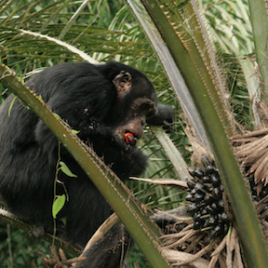
Palm oil agriculture could means trouble for Africa’s great apes
The booming oil palm industry in West and Central Africa could have a negative impact on great apes, a new study shows. The authors estimate that nearly 40% of the distribution of great ape species on unprotected lands overlaps with suitable oil palm areas. The countries most at risk are Gabon, Congo, and The Democratic […]
A tale of good fungus, bad fungus
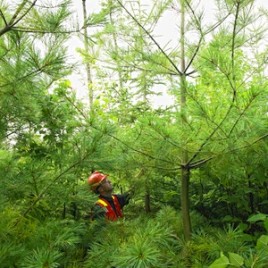
Researchers have found a new source for a fungus-fighting chemical: the pine trees and blueberry bushes of the Acadian forest. Griseofulvin is a compound originally isolated from a mould in the same family as those which produce penicillin. It’s used to fight fungal infections in humans and animals, but has also been used as a fungicide […]
Exposure to pesticides impairs bees’ foraging ability
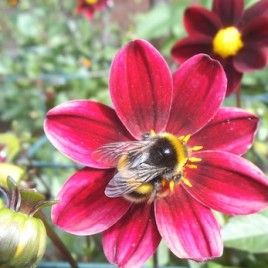
A new analysis confirms that exposure to pesticides – including one in the neonicotinoid (neonic) class – has a negative impact on bees’ foraging ability. The study used radio-frequency identification (RFID) tags to track 259 bees from 40 colonies over 4 weeks. Bees exposed to the neonic pesticide either by itself or mixed with another […]